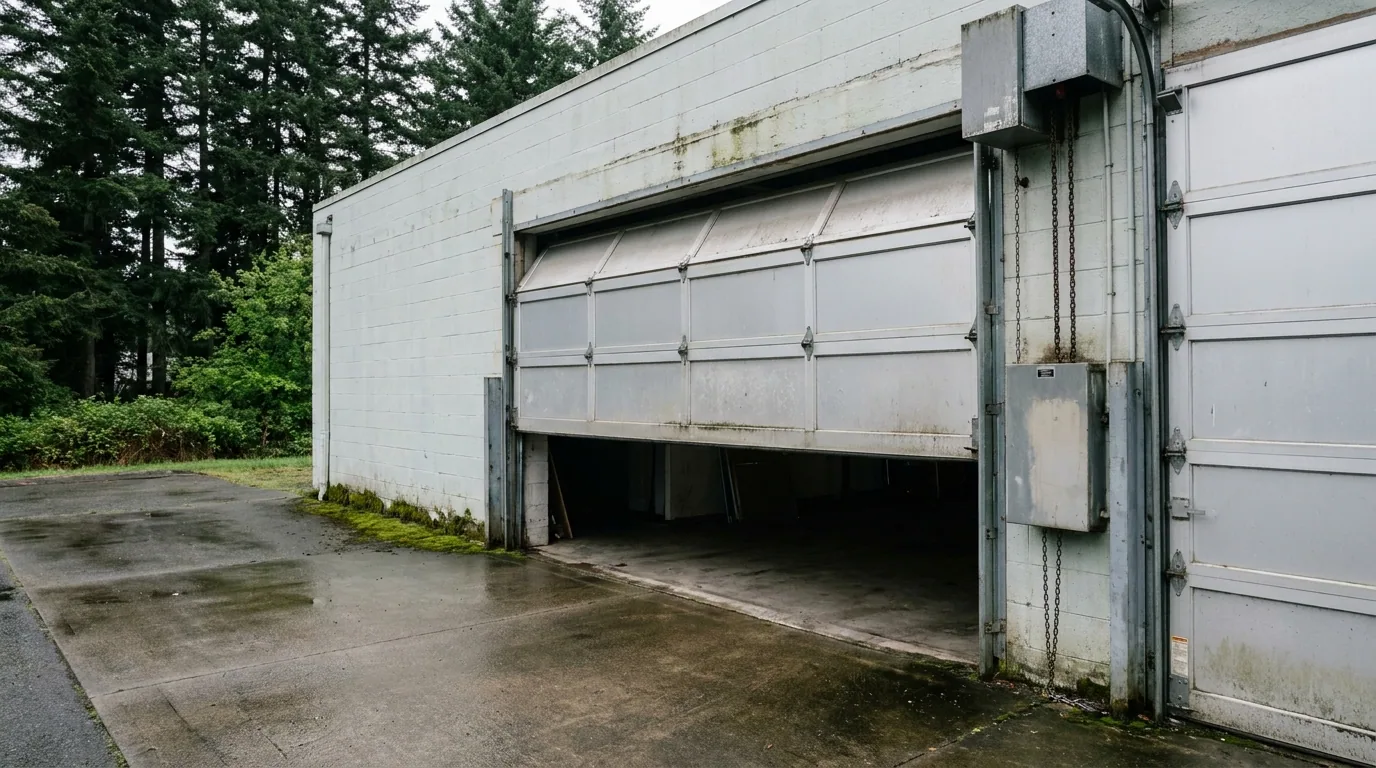
You press the button, the door rises about a foot, and then it stops — or reverses and settles back down. Press again and it does the same thing. The pattern is consistent, which is useful: a door that fails the same way every time is usually telling you something specific. This article walks through the most likely causes of a door that opens a short distance and quits, what you can safely check on your own, and where the line is between a homeowner task and a job for a technician. It applies to the detached garages and single-car doors common in older Seattle neighborhoods, but the mechanics are the same on most residential doors.
First, separate the two behaviors
"Opens a foot then stops" can mean two different things, and they point in different directions.
- It stops and stays put. The motor quits and the door hangs there. This points toward the opener losing power, a binding door, or a safety device interrupting the cycle.
- It stops, then reverses back down. The motor keeps running briefly and the door returns to the closed position. This points toward the opener's travel limits or force settings, or something obstructing the door's path.
Watch one full cycle with the garage empty and note which one you see. That single observation narrows the list considerably.
Check the simple things first
Before anything mechanical, rule out the ordinary. A door that stops a foot up is sometimes responding to a safety device rather than a broken part.
The photo-eye
Most openers have a pair of small lenses near the floor at each side of the opening. They send an invisible beam across the doorway. If that beam is blocked or the lenses are misaligned, the opener will reverse a door that is closing — and only while it is closing. The photo-eye is a safety device on the down travel. It has no role in a door that will not start, opens a little and reverses, or stops short on the way up. So if your door rises a foot and then goes back down, the photo-eye is not the usual answer, despite what you may read elsewhere. Still, it is worth a glance: wipe the lenses clean and make sure nothing — a broom, a recycling bin, a snow shovel — sits in the beam's path.
The wall control and the remote
Try the wall-mounted control instead of the remote. If the wall control behaves the same way, the remote is not the problem. If the wall control works and the remote does not, the issue is in the remote or its battery, not the door.
The manual release
With the door fully closed, pull the red release handle to disconnect the opener from the door. Then lift the door by hand. A door in good adjustment should rise smoothly and stay put when you let go at about waist height. If it feels very heavy, binds partway up, or drops immediately, the door itself is the problem and the opener is only reporting it. Reconnect the release before you do anything else, and do not attempt to adjust the springs or cables yourself — those carry the door's full weight and belong with a technician.
When the door itself is binding
A door that binds creates resistance, and most modern openers are set to stop or reverse when they meet resistance. That is a safety feature working as designed. The door rises until the binding load exceeds the opener's force setting, and then it quits.
Common sources of binding on older doors include:
- Dry or rusted rollers. A steel roller that no longer spins freely drags in the track and loads the opener. In Seattle's damp months, unprotected roller stems and hinge plates oxidize, and a roller that should spin starts to skid.
- Track damage or misalignment. A track that has been bumped — by a car, a ladder, a stored bike — can pinch the rollers partway up the travel.
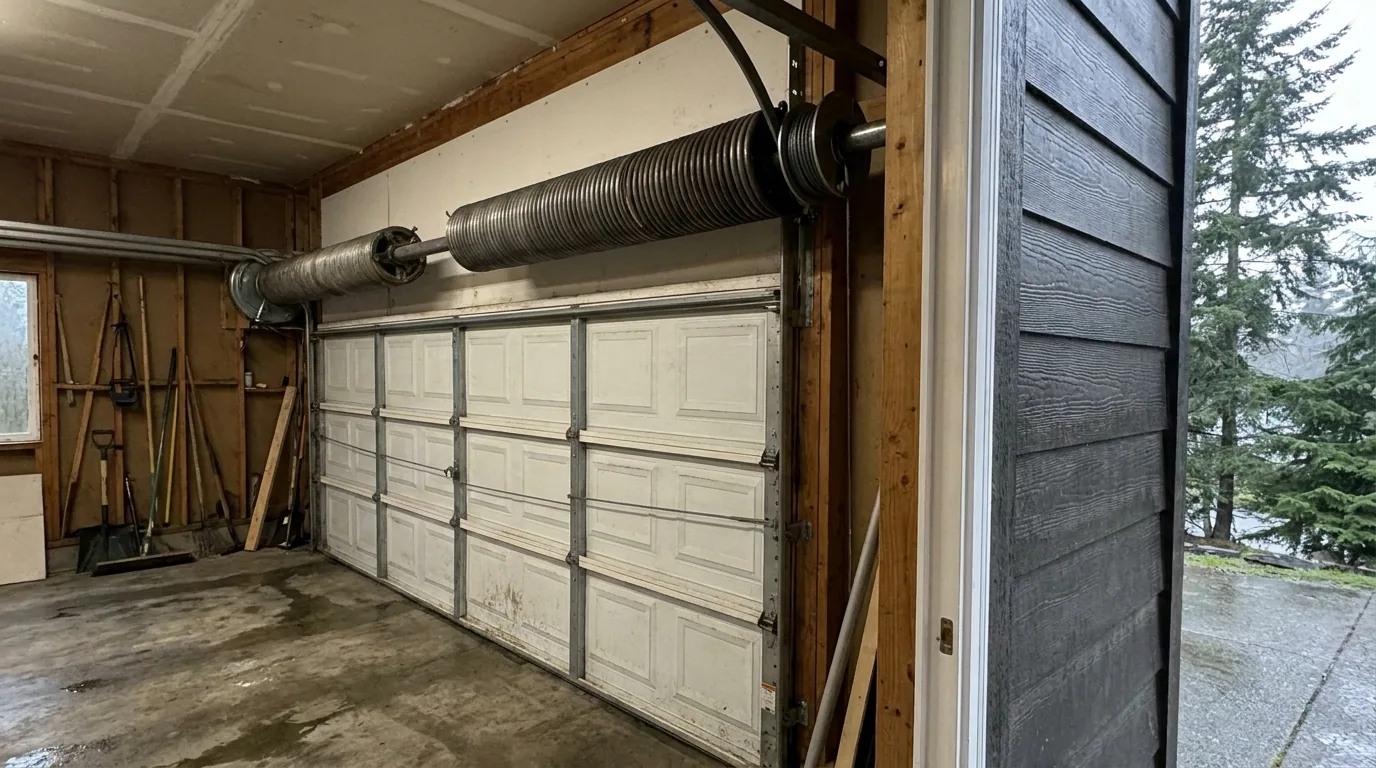
- A door out of balance. If the springs no longer carry the door's weight, the opener lifts more than it should. A broken torsion spring cannot hold the door's weight at all, and the door will feel extremely heavy by hand.
- Swollen wood. On older wooden doors, damp can swell panels and jam them against the frame, especially after a wet stretch.
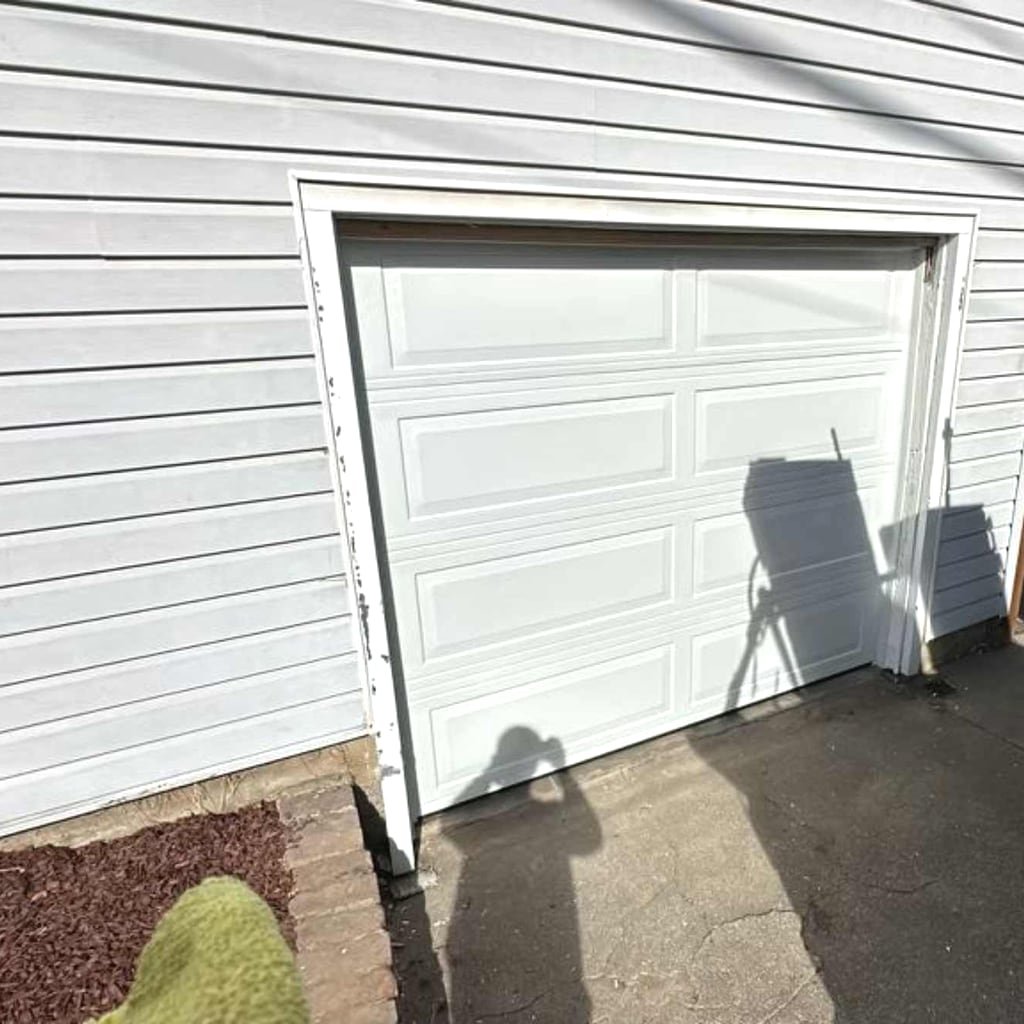
You can observe the door from outside with the garage empty: does it rise crooked, with one side higher than the other? Is there a gap along the top when it is closed? Does it feel noticeably heavier than it used to? Those observations are useful to a technician and safe to make. Leave the springs, cables, and opener drive train to a professional.
When the opener is the problem
If the door moves freely by hand and the track is clear, the fault is often in the opener itself. Two causes are worth knowing about.
Travel limits and force settings
Openers have adjustable travel limits that tell the motor how far to run in each direction, and force settings that tell it how much resistance to accept before stopping. A limit that has drifted — or a force setting that is too low for a door that has become slightly harder to lift — will stop the door a foot up, every time. These settings are adjustable, but the correct adjustment depends on the door's actual weight and balance. A technician sets them against the door, not by guesswork.
A failing drive train
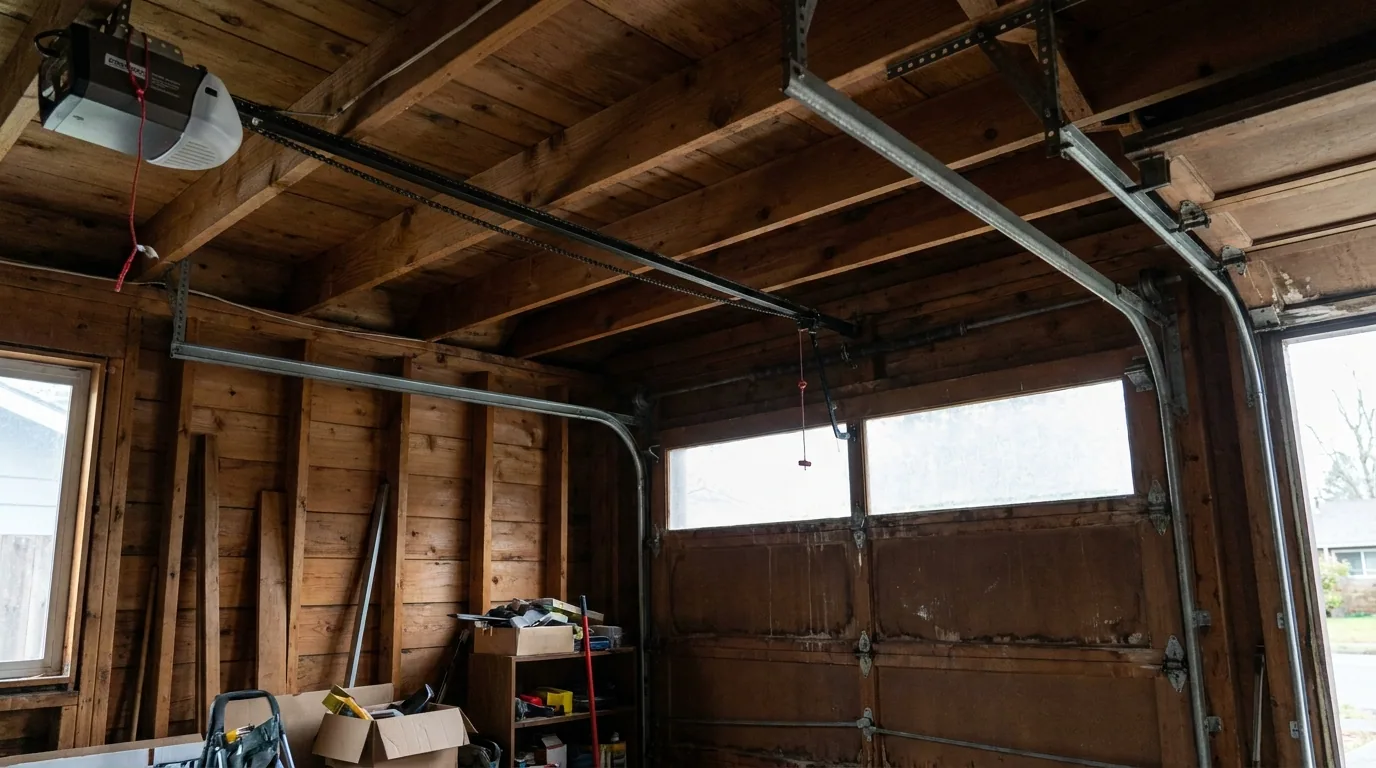
A stripped opener gear lets the motor run without moving the door — you hear the motor but the door does not travel. A failing capacitor or a worn belt can produce a similar short-cycle symptom. These are internal to the opener and are not homeowner repairs.
What to do next
If you have cleaned the photo-eye lenses, tried the wall control, and confirmed the door moves freely by hand, the next step is a proper diagnosis. A technician can check the springs and cables, inspect the rollers and track, and set the opener's travel limits and force to match the door. If you are in Seattle or the surrounding neighborhoods and want a hand with it, F1 Garage Door Service and Repair LLC can be reached at (206) 647-7202 or info@f1garagedoors.com. The company is a registered Washington State contractor serving Hillman City, Columbia City, Rainier Valley, Rainier Beach, Seward Park, Mount Baker, Beacon Hill, Georgetown, the Central District, Capitol Hill, West Seattle, Ballard, Burien, Tukwila, Renton, and Bellevue, with weekday hours from 7:00 AM to 8:00 PM, Sunday emergency service, and 24/7 emergency dispatch.