If you live in Seattle, the wet months are not a brief interruption. From fall into spring, the air stays damp and the ground stays wet. That has a slow, cumulative effect on the parts that make a garage door move: hinges, rollers, cables, bottom seals, and the wood of the door itself. Much of it happens out of sight until something squeaks, drags, or stops working. This is a look at what the wet season actually does to the hardware, what you can reasonably check on your own, and where the line is between a homeowner task and a job for a technician.
Rust on hinges and rollers
Most residential hinges, roller stems, and track brackets are steel. When the relative humidity stays high for weeks, a thin film of moisture can sit on unprotected metal, and that film is enough to start oxidation. You will usually see it first as a dull reddish-brown tint on hinge plates or roller stems, or as a roughness you can feel with a fingertip. Left alone, rust pits the surface. A roller that should spin freely starts to drag, and a dragging roller makes the door harder to move and louder in the track.
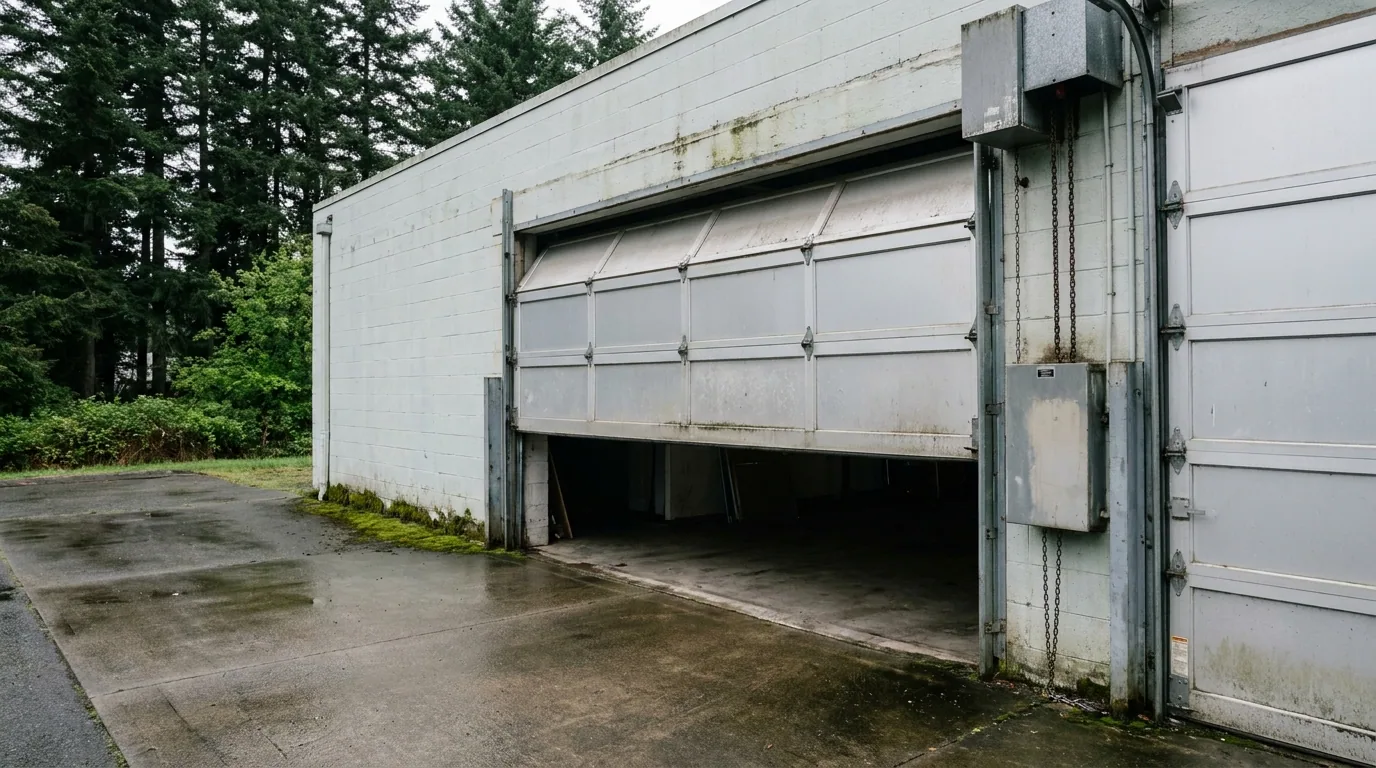
Salt carried in the air near the water adds to the load on exposed metal, but damp is the main driver anywhere. A detached garage with a concrete slab that never fully dries keeps its hardware in a humid pocket through the whole wet season. Hinges squeak or grind, rollers flat-spot, and the door feels heavier than it did in summer.
What you can do: wipe the hinge plates and roller stems with a dry cloth a few times over the wet months, then apply a light silicone-based lubricant to the hinge pivots and roller bearings. Keep heavy grease off the hardware; it collects grit and holds it against the metal. Do not lubricate the track itself. If a roller will not spin by hand or the stem is visibly pitted, that roller needs replacing, and that is a technician job.
Wooden doors that swell and bind
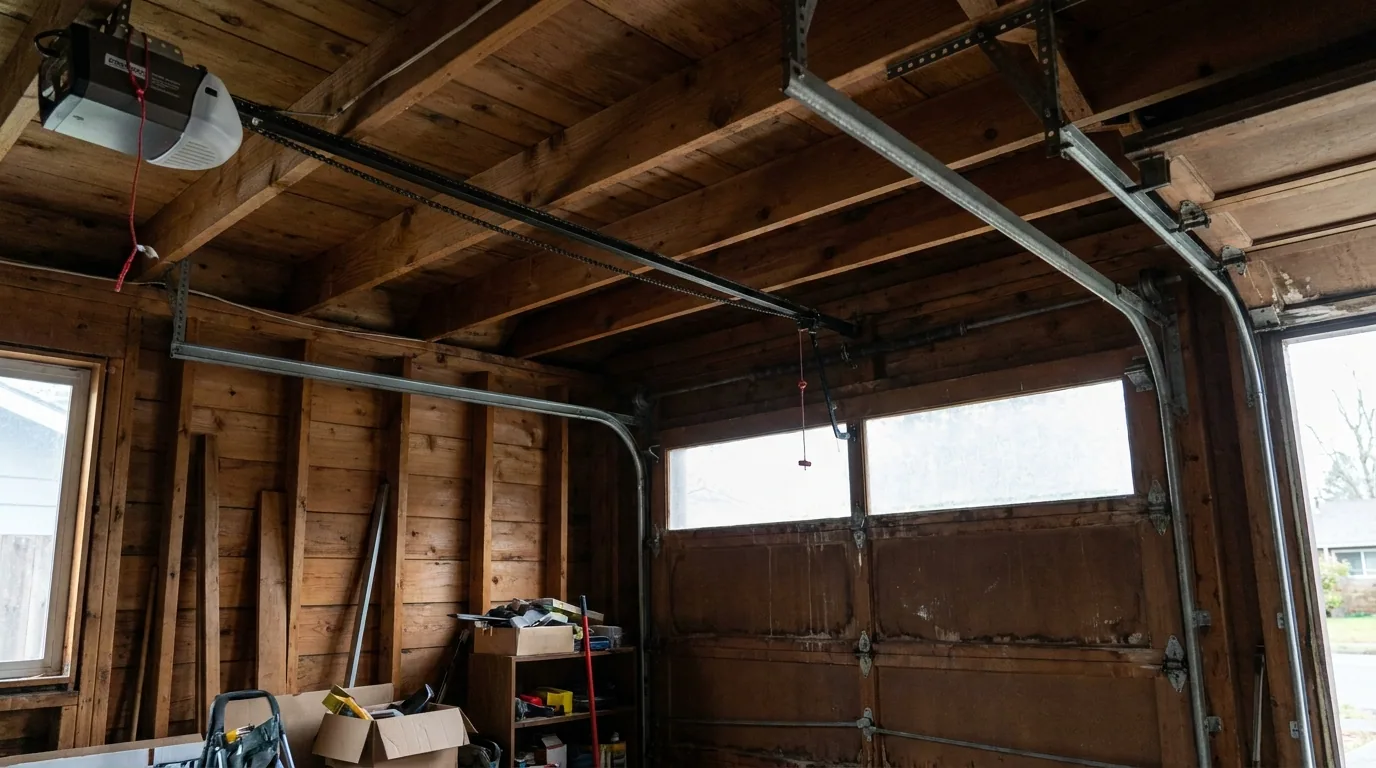
Plenty of older homes around Hillman City, Columbia City, and Mount Baker still have their original wooden garage doors, or a replacement that has been in place for decades. Wood takes up moisture from the air and expands as it does. A door that cleared its frame in August can start rubbing at the edges by January. You may notice the door catching on the frame, the bottom seal dragging on the concrete, or the opener straining at the start of a lift.
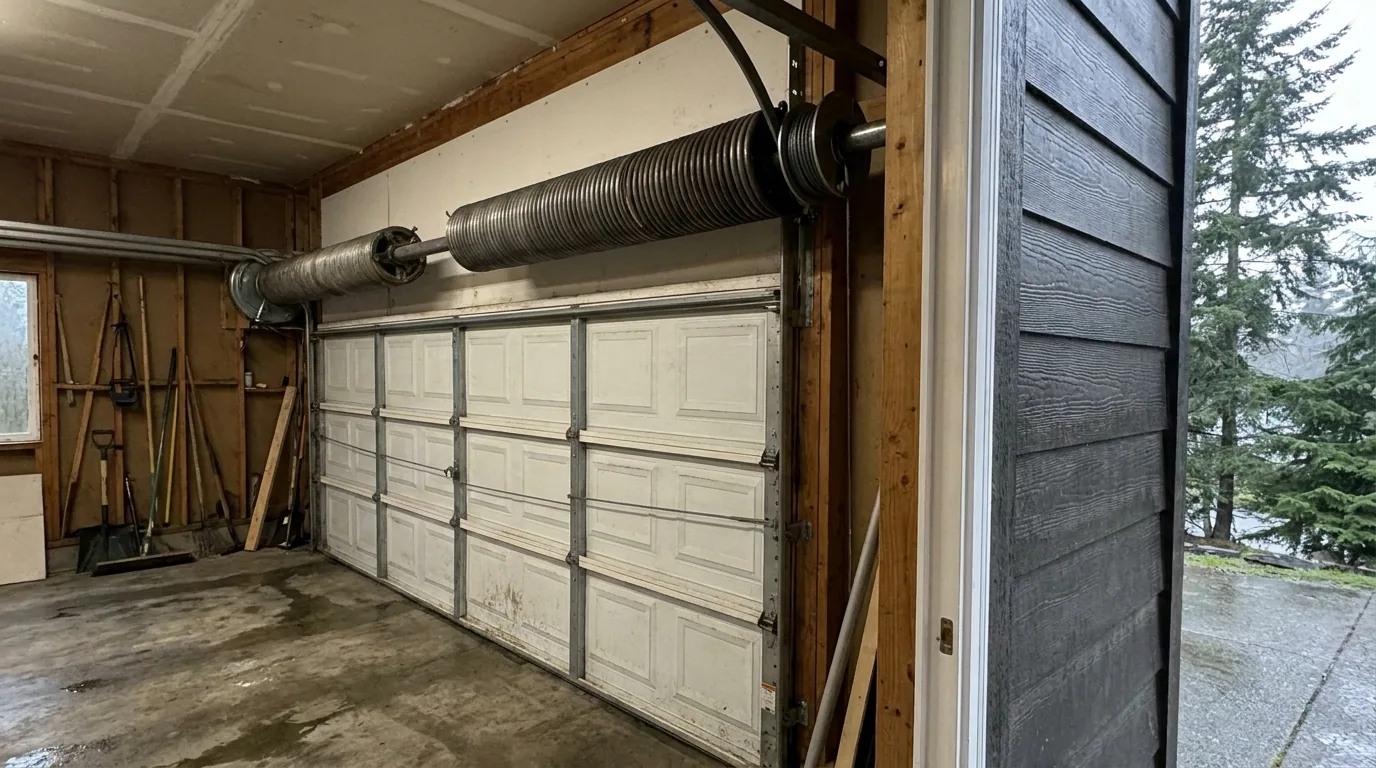
Swelling also works at the joints where stiles and rails meet, and on doors with glass panels it can crack old glazing compound as the wood moves. Because a damp door is heavier, the opener and springs carry more load. The springs themselves are not usually the first thing to fail from moisture; they live above the door and fail far more often from cycle fatigue than from damp.
What you can do: check the bottom seal for tears and compression, and note exactly where the door rubs. Do not force a binding door; that can bend the track or strip the opener gear. A coat of exterior-grade paint or stain on the door's surfaces, keeping it off the hardware, slows moisture uptake. Track adjustment or planing an edge is work for a technician.
Bottom seals and weatherstripping
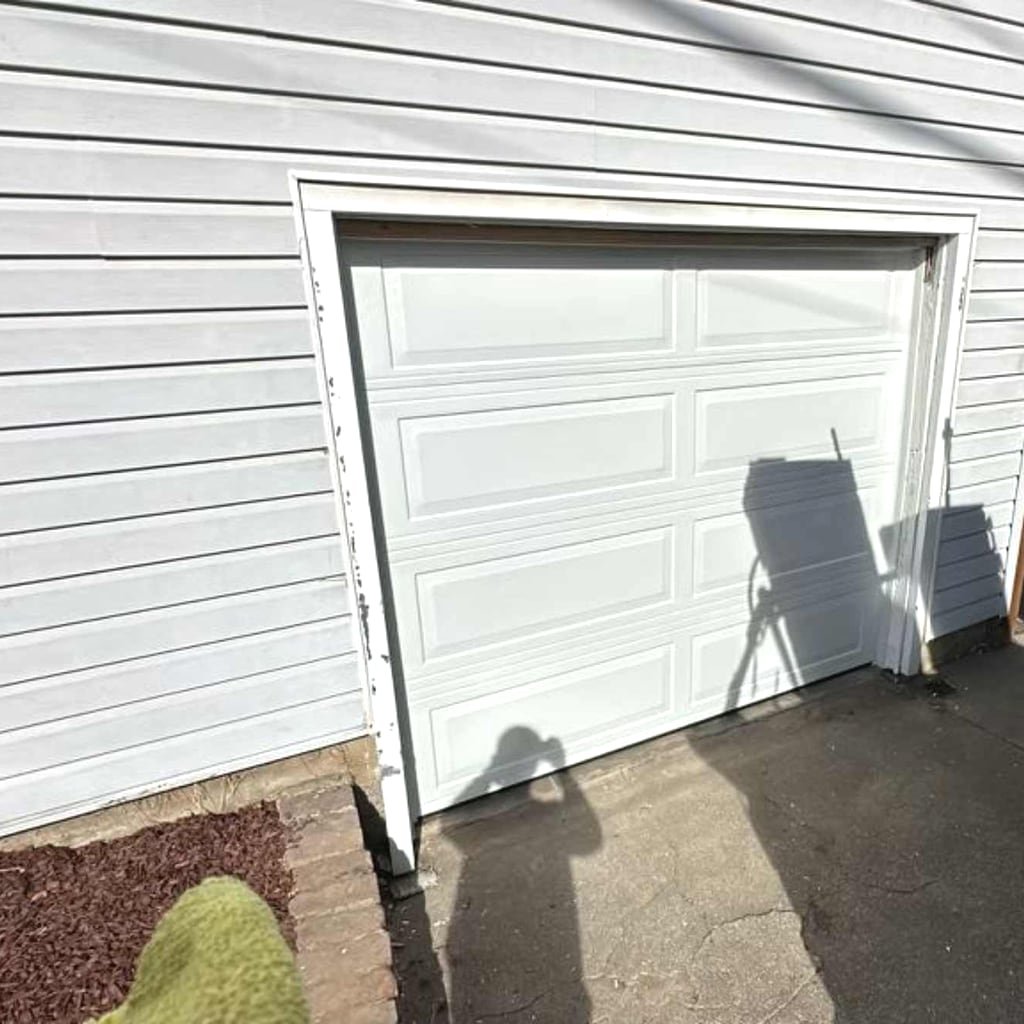
The seal along the bottom of the door takes the worst of it. Rain, grit off the driveway, and constant flex wear it down. A hardened or torn seal lets water pool under the door, which keeps the slab damp and puts the bottom brackets and cables in a chronically wet environment. That is where rust on cables starts.
You can inspect the seal yourself with the door closed: run a hand along the bottom edge and feel for cracks, flat spots, or missing chunks. Replacing a worn seal is a reasonable homeowner job on many doors. If the work brings you anywhere near the bottom bracket or the cable, stop. Those parts are under high tension and are not a homeowner task.
Cables, and the noises you cannot place
Cables are more exposed than springs. A cable that rusts can fray and eventually snap, and a door with a snapped cable hangs at an angle. If you see broken strands on a cable, or the door sits crooked in the frame, keep the door closed and call for service rather than cycling it.
Other symptoms are less clear-cut. A door that is louder some mornings than others, or that squeals only on the way down, can have several causes: a dry steel roller on the track, a hinge pivot that has lost its lubricant, or a roller that has flat-spotted and is skidding instead of rolling. You can separate them partly by ear and by hand. With the door closed and the opener disconnected, try each roller between thumb and finger; a roller that will not turn is the culprit. A squeal that follows one hinge as the door moves points to that hinge. If neither test finds it, describe what you hear and when to a technician rather than guessing at a mechanism.
Habits that help through the wet season
- Keep the slab as dry as you can. Sweep out standing water after a storm. A wet floor keeps the whole garage humid.
- Lubricate the moving parts, not the track. Silicone-based lubricant on hinge pivots and roller bearings a few times a year.
- Watch for changes. A door that suddenly runs louder, slower, or crooked is telling you something. Deal with it before it becomes a bigger repair.
- Book a tune-up before the wet season starts. A technician can catch rust, seal wear, and balance problems while they are still small, and check the safety reverse while they are there.
F1 Garage Door Service and Repair LLC is a registered Washington State contractor working throughout the Seattle area, including Hillman City, Columbia City, Rainier Valley, Rainier Beach, Seward Park, Mount Baker, Beacon Hill, Georgetown, Central District, Capitol Hill, West Seattle, Ballard, Burien, Tukwila, Renton, and Bellevue. If your door is showing weather-related wear, call (206) 647-7202 or email info@f1garagedoors.com. Hours are Mon-Sat 7:00 AM - 8:00 PM, with 24/7 emergency dispatch and Sunday emergency service only.