Rust on a garage door rarely announces itself. It starts as a faint orange bloom on a hinge pin, a dull haze along a bottom bracket, a crusty line where the bottom seal meets the concrete. By the time it is obvious, the part underneath has often been failing for a while. In Seattle, where months of rain and long stretches of high humidity keep a detached, unheated garage damp for weeks at a time, steel hardware corrodes faster than most homeowners expect. This article explains where rust tends to start, why damp air matters, what you can safely check on your own, and what actually slows it down.
Why damp air is hard on door hardware
Steel rusts when it is exposed to oxygen and moisture at the same time. A garage door is full of steel: hinges, rollers, track, brackets, springs, and the fasteners that hold everything together. Most of that steel carries a coating — paint, zinc plating, or a similar finish — and that coating is what keeps moisture away from the metal. Rust begins where the coating is worn, chipped, or scratched, or where water sits long enough to work its way in.
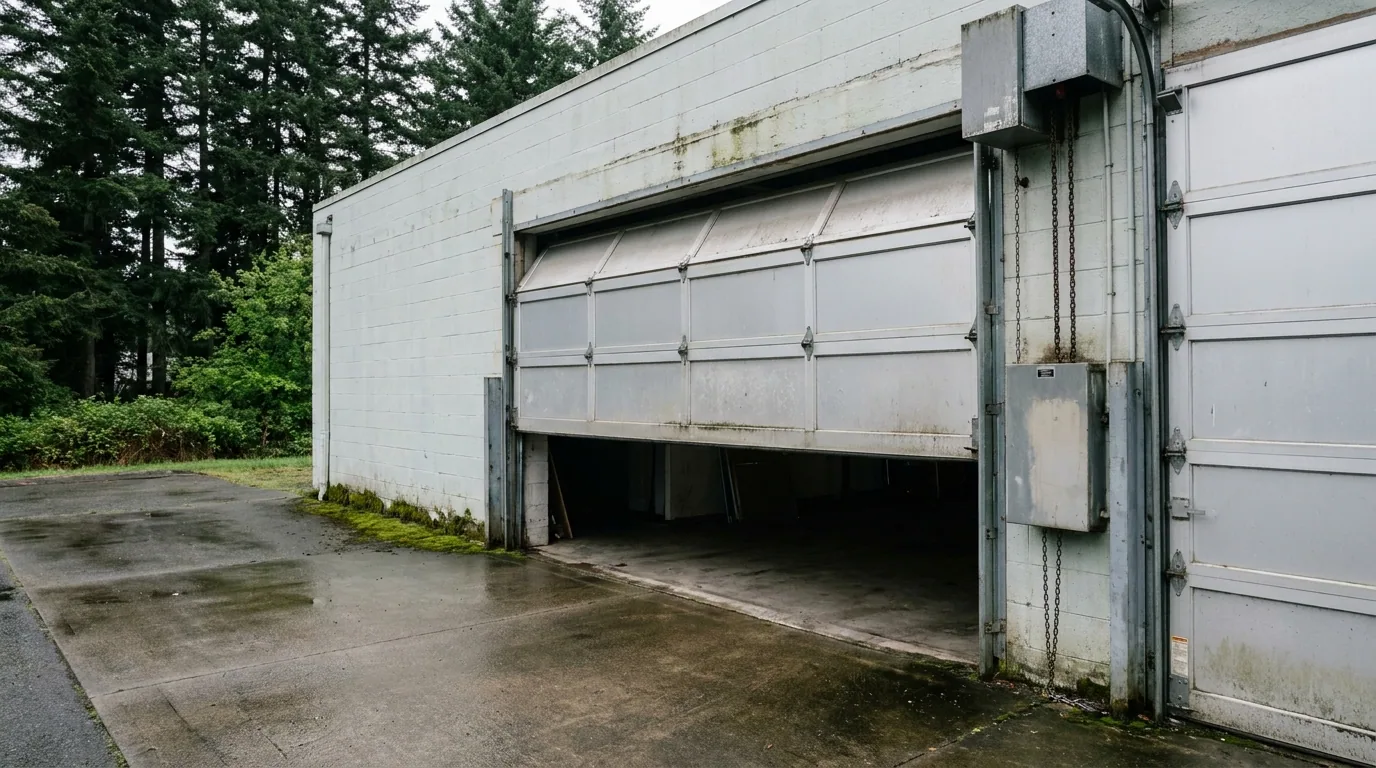
What matters here is duration. Months of rain, cool temperatures, and long spells of high humidity mean the garage and everything in it stay damp for extended periods. A detached, unheated garage holds that moisture inside. Water that would evaporate in an afternoon in a drier climate can sit on a bottom bracket for days. Rust is patient, and damp gives it the time it needs.
How much a given door corrodes depends on how much weather it faces and how well it dries out between storms. A door on an exposed wall that never fully dries will usually show rust sooner than one that stays sheltered. That is a difference between individual doors, not between one part of the region and another.
Where rust starts first
Rust does not spread evenly. It concentrates where water collects and where the protective coating is thinnest or most often disturbed.
- Hinges. Hinge pins and plates take repeated movement and lose their coating at the wear points. They also hold moisture in the small gaps where plates meet.
- Rollers. Steel rollers and their stems are exposed to the track and to the air. A dry or corroded roller is a common source of a squeal or grind.
- Bottom brackets and the bottom edge of the door. This is the lowest point, closest to the concrete, where water pools and splashes. The bottom seal traps moisture against the door and the bracket.
- Track and fasteners. Track joints and bolt heads collect water and road spray. A rusted fastener can seize in place and make later repairs harder.
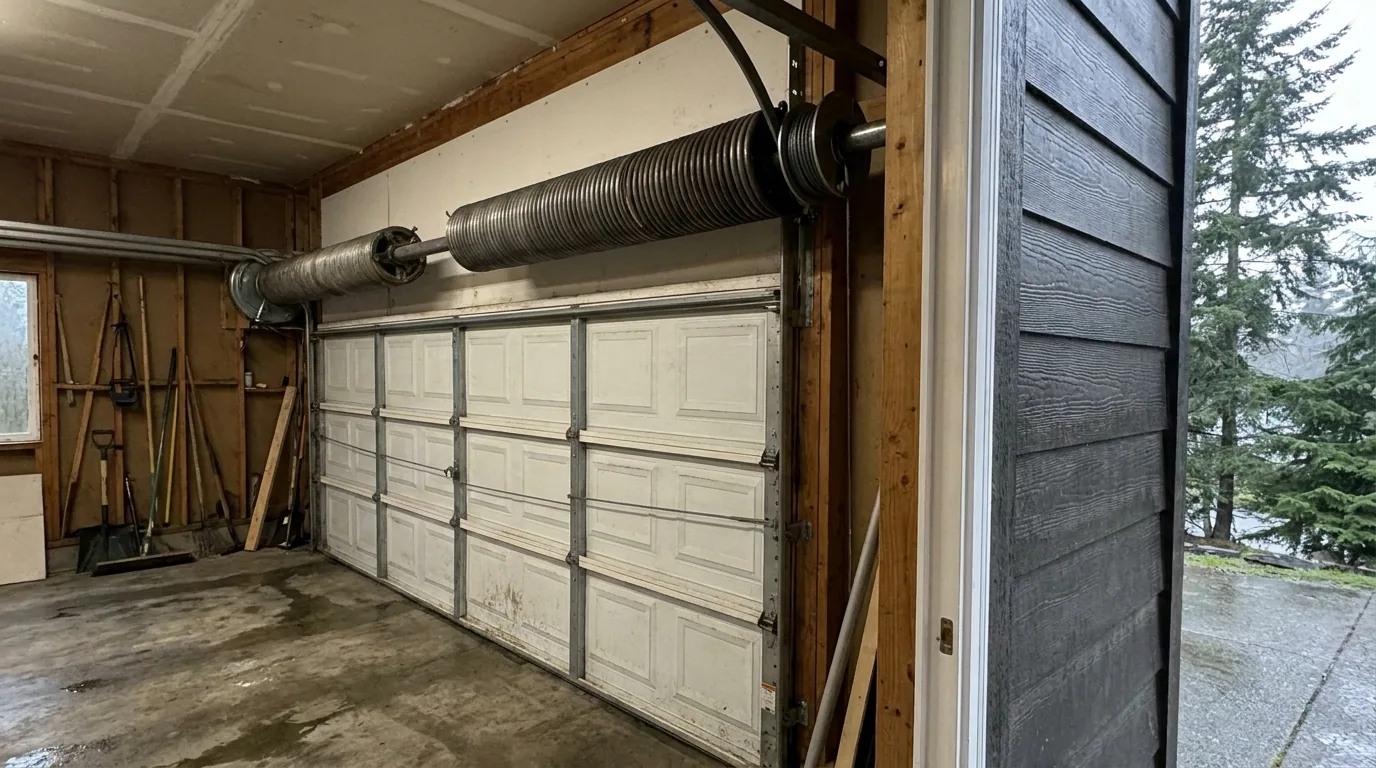
- Springs. Springs are under load and coated, but they are still steel in a damp space and can corrode over time.
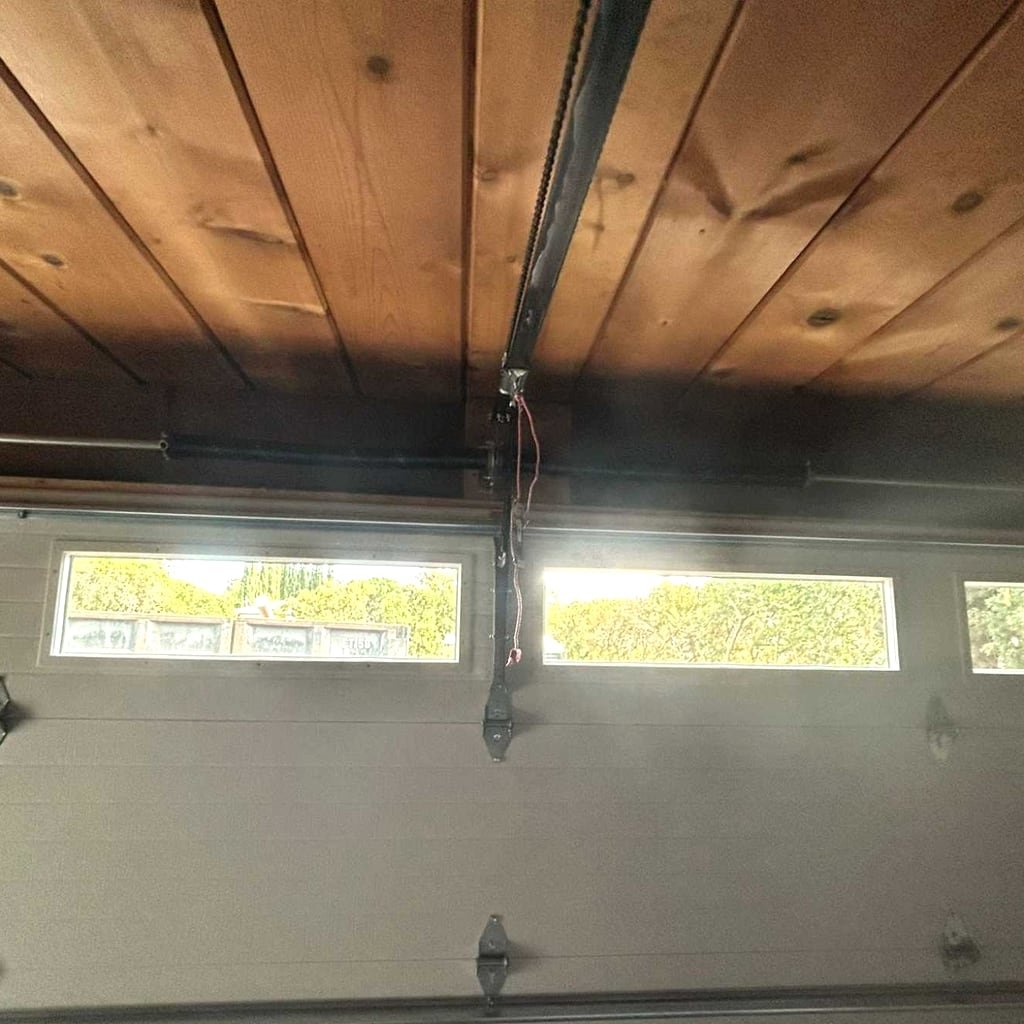
Some of these parts are visible from the floor with the door closed. Others sit above the door or behind the springs, and are best left to a technician. The line matters: you should not be reaching into the spring assembly or the opener drive train to check anything.
What you can safely check yourself
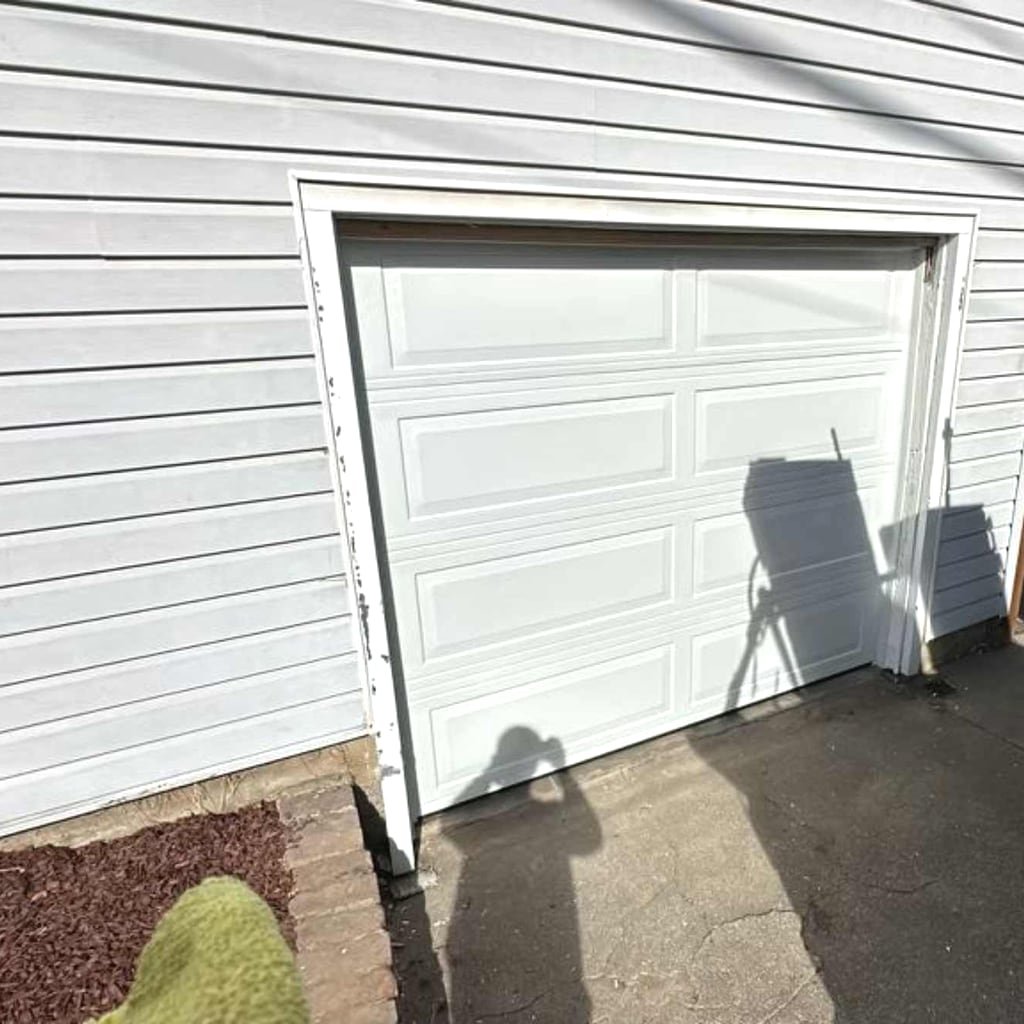
With the garage empty and the door closed, stand back and look at the door as a whole. Rust on the visible face of a steel door usually shows as small orange or brown spots, often along the bottom edge and around the hinges. What you are really watching for is whether the rust is only surface staining or whether it has begun to pit and flake. Flaking paint with rust underneath means the coating has failed in that spot and moisture is reaching bare metal.
You can also listen and feel, without touching the moving parts. Run the door and pay attention to a new squeal, a grinding sound, or a door that feels heavier or runs less smoothly than it used to. A door that sits crooked, or shows a gap along the top when closed, is telling you something mechanical is off — and rusted or seized hardware is one possible reason, though not the only one. If you notice any of these, stop cycling the door and have a technician look at it.
What you should not do is climb a ladder to inspect the springs, spray lubricant into the spring coils, or try to free a rusted roller or bracket by hand. Those parts are under tension or carry the door's weight, and a part weakened by corrosion can fail suddenly. That belongs with a technician.
What prevention actually looks like
There is no way to make steel immune to damp air, but you can slow corrosion considerably by keeping water off the metal and keeping the coating intact.
- Keep the bottom of the door dry. Clear leaves and debris from the threshold so water does not stand against the bottom seal. If the garage floor slopes toward the door, a small drainage fix can make a real difference.
- Touch up bare spots promptly. A chip in the paint on a steel door or a scratched hinge plate is an opening for rust. Cleaning and repainting small areas while they are small is far easier than treating a rusted panel later.
- Keep hardware lubricated. A technician will lubricate hinges, rollers, and moving parts during a tune-up. Lubrication does not stop rust on its own, but it keeps parts moving freely and reduces the wear that strips protective coatings.
- Watch the bottom seal. A torn or flattened seal lets water and debris sit against the door and bracket. Replacing a worn seal is a small job that protects more expensive parts.
- Schedule periodic inspection. A tune-up and safety inspection gives a technician the chance to check the springs, cables, and rollers that you should not be handling, and to catch corrosion before a part seizes or fails.
When rust means a repair, not just a cleanup
Surface rust on a painted panel is mostly a cosmetic and maintenance issue. Rust that has reached a hinge pin, a roller stem, a bottom bracket, or a fastener is a mechanical issue, because a corroded part can seize, bind the door, or fail under load. A door that has started to run rough, hang crooked, or make a new noise is worth having looked at before the problem grows. If you are in Seattle or the surrounding service area and are not sure whether what you are seeing is surface staining or something structural, call F1 Garage Door Service and Repair LLC at (206) 647-7202 or email info@f1garagedoors.com. The company is a registered Washington State contractor serving Hillman City, Columbia City, Rainier Valley, Rainier Beach, Seward Park, Mount Baker, Beacon Hill, Georgetown, the Central District, Capitol Hill, West Seattle, Ballard, Burien, Tukwila, Renton, and Bellevue.