A damaged garage door panel leaves most homeowners with the same question: can this be fixed, or am I looking at a new door? The answer depends less on how bad the damage looks and more on where it sits, what the panel is made of, and whether the door still runs straight. On the older detached garages common around Hillman City and Columbia City, panels often show a mix of problems at once — a dent from a bumper, rust along the bottom edge, swelling at the base of a wood section — and sorting them out one at a time is usually cheaper than replacing everything. This article walks through how to think about repair versus replacement, what you can safely check yourself, and where the line falls between a homeowner task and a job for a technician.
Start with where the damage is
Garage door panels are not all equal in how they carry load or how they are fastened. The bottom section takes the most water, the most road spray, and the most contact from tires and toys. It also carries the bottom seal and often the bottom bracket. A dent or rust hole low on the door is common and, on many doors, that section can be replaced on its own.
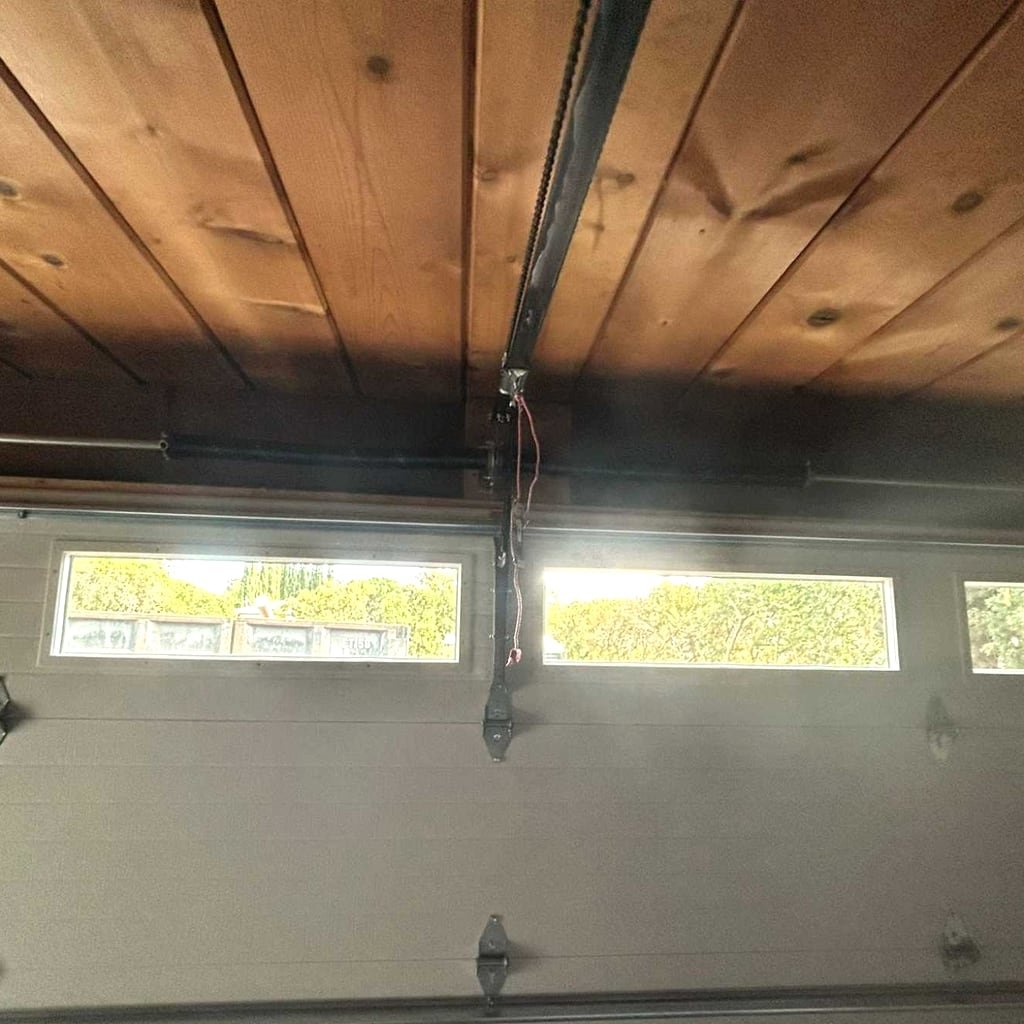
Upper sections are usually simpler to swap, but they are also where a crooked door shows first. If one section is dented and the door still sits level and runs quietly, a panel replacement is often straightforward. If the door hangs at an angle, binds in the track, or a cable has snapped, the panel is not the whole story — the door has a mechanical problem that has to be corrected first. A technician can tell you whether the panel damage is cosmetic or a symptom.
What can be repaired, and what usually cannot
Some panel damage is genuinely repairable. A shallow dent in a steel panel can sometimes be worked out or filled and painted. Surface rust that has not eaten through the metal can be sanded, treated, and repainted. A loose hinge or a roller that has pulled free of its stile can often be re-fastened. These are the cases where a repair makes sense.
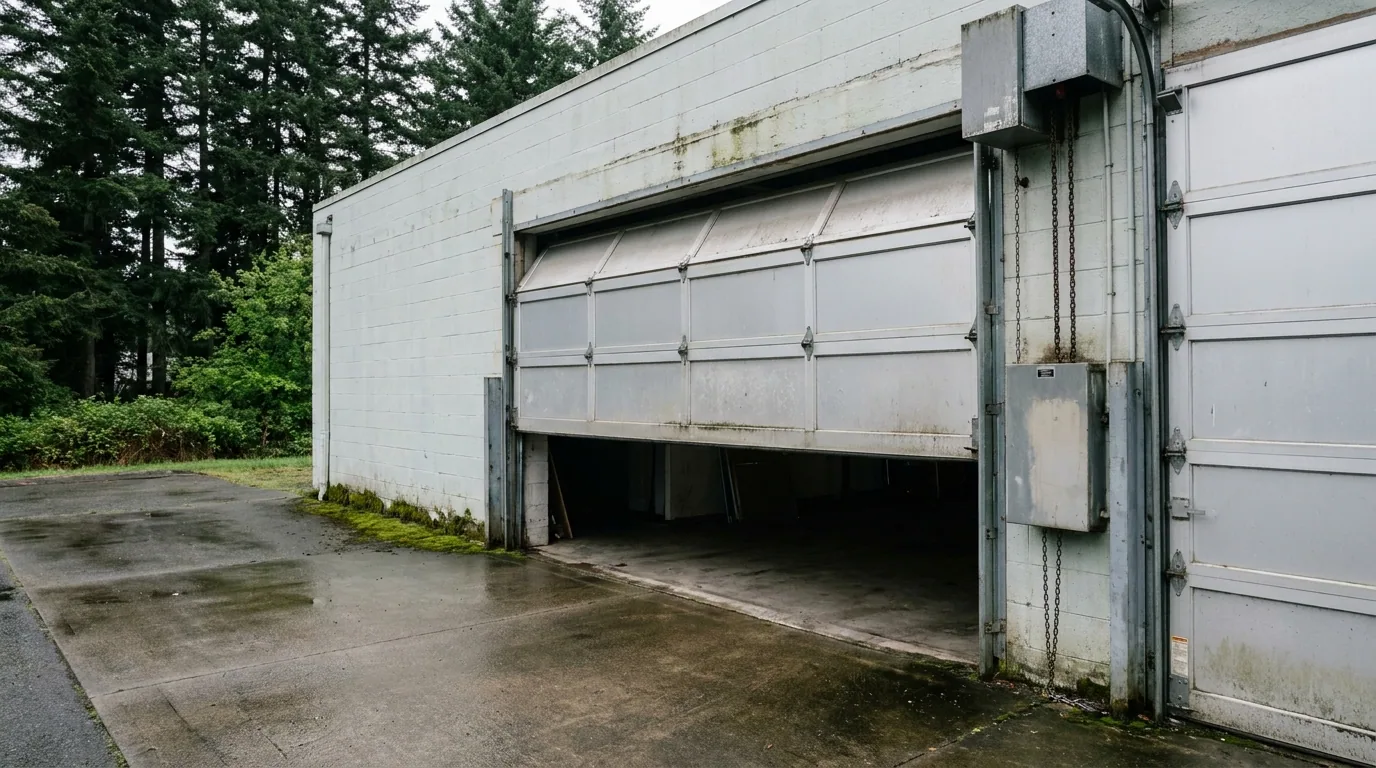
Other damage does not repair well. A crease that runs across the full width of a section has usually stretched the metal, and it will not flatten back cleanly. Rust that has perforated the panel means the steel is gone, not just stained. A wood section that has swelled and delaminated at the bottom will keep absorbing water no matter how it is patched. In those cases, replacing the section is the honest fix.
Matching panels on an older door
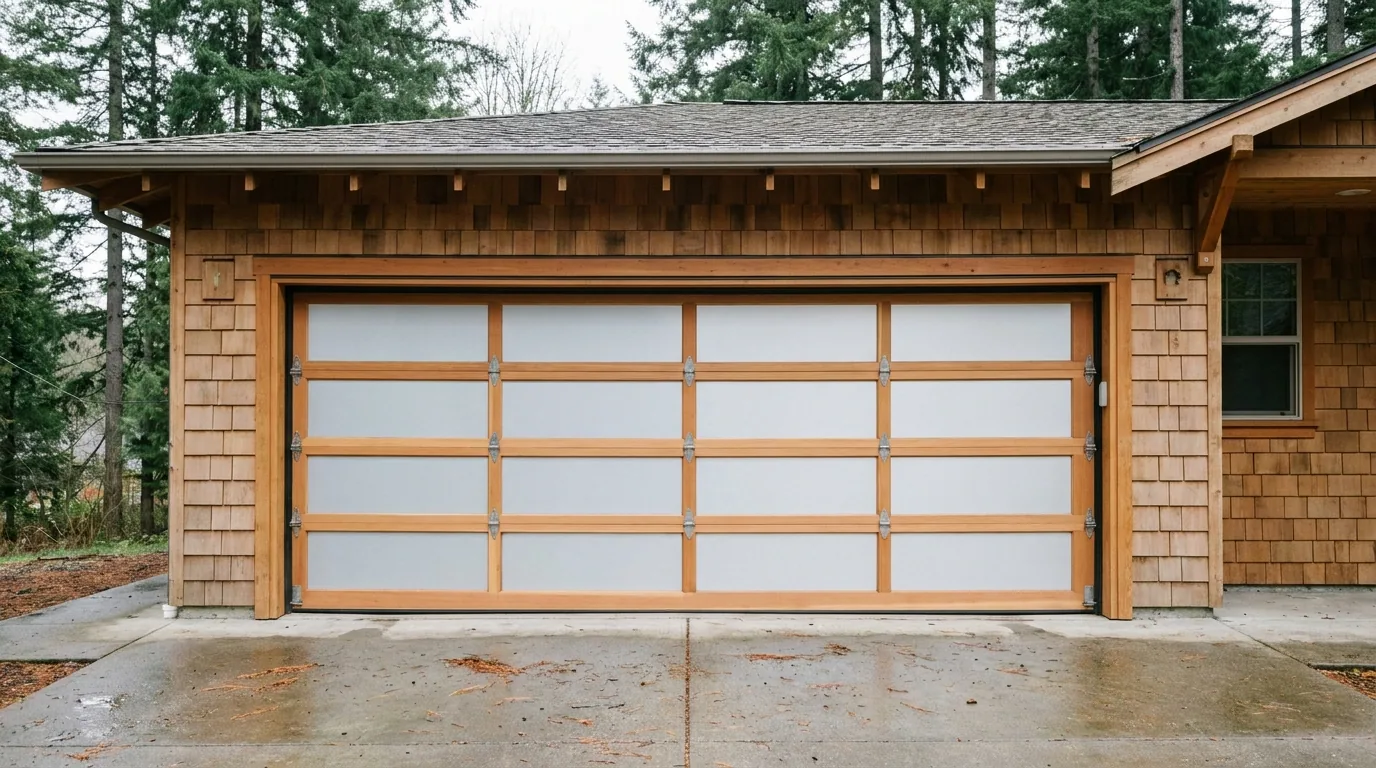
The practical obstacle on older doors is matching. Panel profiles, embossing patterns, and colors change over the years, and a door installed decades ago may not have an exact current match. A close match in the same material and profile is often possible, and the difference is usually less noticeable than a homeowner expects, especially on a painted door. If the door is a distinctive style or the match is poor, replacing a pair of sections or the whole door can look more consistent than one odd panel.
Color is the other variable. A factory-finished panel may not match a door that has faded over years of sun and rain. Painting the repaired area or the whole door is often part of the job. A technician can tell you what is realistic before any work starts.
What you can check safely
With the garage empty and the door closed, you can do a few useful things without touching the springs, cables, or opener drive train. Open and close the door from the wall button and watch and listen. Note whether the door sits level across the opening, whether there is a gap along the top when closed, whether it feels heavier than it used to when you lift it by hand with the opener disconnected, and whether a new noise shows up at the start of a cycle. Those observations help a technician narrow down the cause quickly.
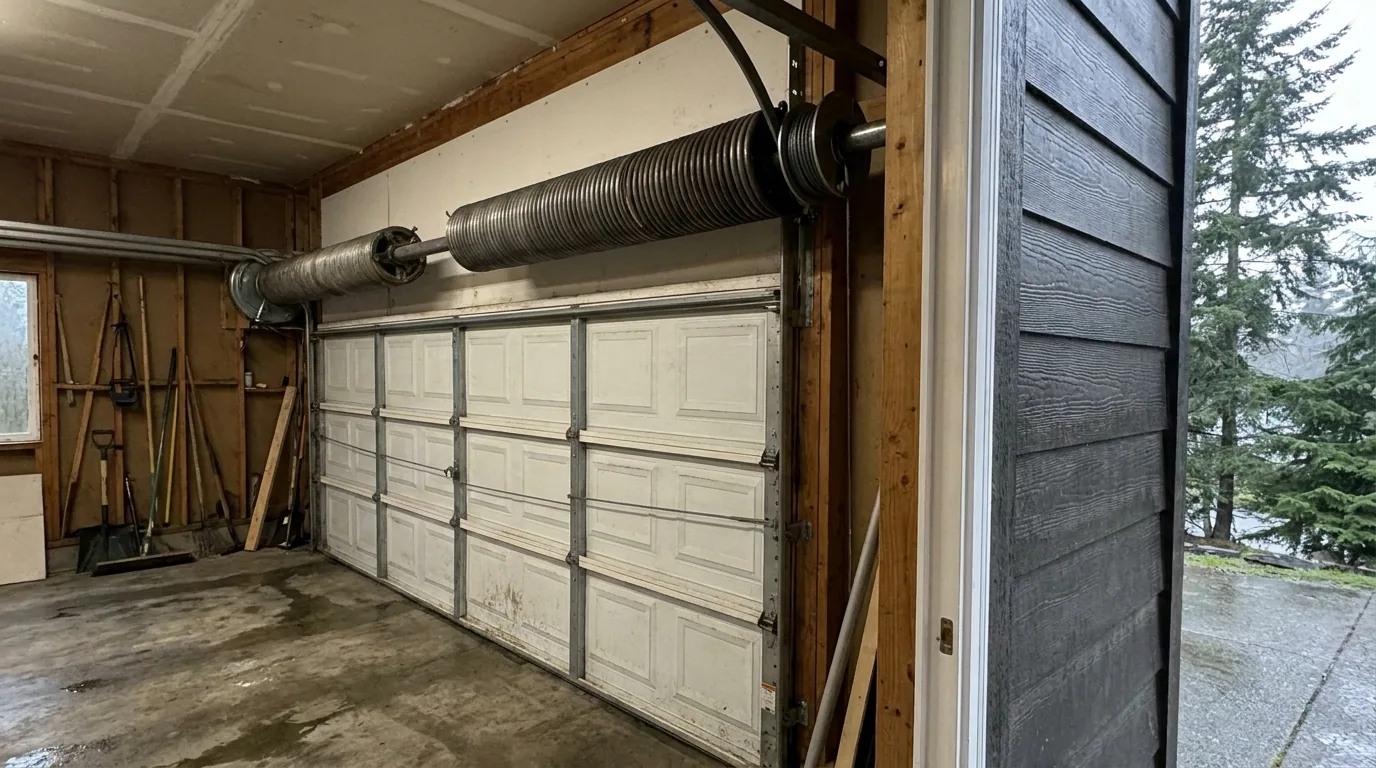
You can also rinse road salt and grit off the bottom section and keep the bottom seal clear of debris. Do not try to straighten a bent section, adjust a track, or reattach a cable yourself. Tracks, cables, springs, and the opener drive train belong with a technician — a door under spring tension can move suddenly and cause serious injury.
When the whole door is the better call
Replacing the whole door starts to make sense when the damage is widespread rather than isolated: several sections rusted or dented, a wood door with rot in multiple stiles, or a door whose panels are no longer available in a matching profile. It also makes sense when the door is old enough that the hardware is at the end of its life and the panels are only part of the problem.
If you are weighing repair against replacement, describe the damage and the door's age to a technician and ask what a section replacement would involve. F1 Garage Door Service and Repair LLC handles panel replacement, new door installation, and tune-ups across Seattle and the surrounding areas, and can tell you which option fits your door. Call (206) 647-7202 or email info@f1garagedoors.com to talk it through.