If a bedroom sits directly over the garage, the opener stops being a background appliance and becomes something you hear at the start of every cycle. The choice between a belt-drive and a chain-drive opener is the most common fork in the road when an old unit is replaced, and it is worth understanding what actually differs between the two before you commit. This article covers how each drive works, where the noise really comes from, what the door itself contributes, and which questions narrow the decision for a house where someone sleeps above the garage.
How the two drives differ
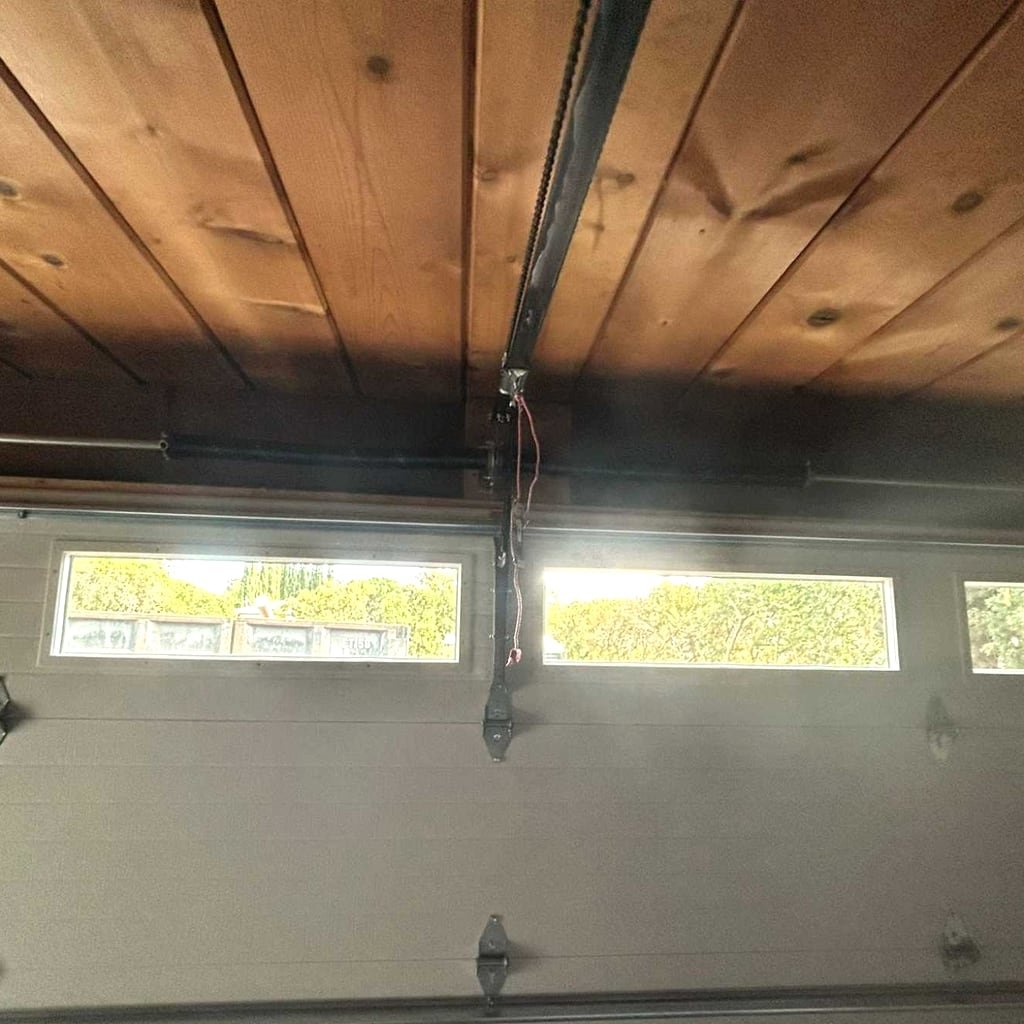
Both openers share the same basic layout: a motor head mounted at the center of the door, a rail running back to a header bracket, and a trolley that travels along the rail to pull the door up and push it down. What separates them is the part that connects the motor to the trolley.
- Chain-drive. A steel roller chain loops around a sprocket on the motor and a pulley at the far end of the rail, and the trolley rides on that chain. It is the older, heavier-duty design and is common on doors that have been in service for a long time.
- Belt-drive. A reinforced rubber belt takes the place of the chain, running on the same kind of sprocket and pulley. Because there are no metal links striking metal sprocket teeth as it moves, the belt runs more quietly.
That is essentially the whole mechanical difference. The motor, the safety reverse system, the wall control, and the photo-eye work the same way on both.
Where the noise actually comes from
Homeowners often assume the motor is the noisy part. It usually is not. Motor hum is steady and fairly low. The sharp, rattling, metallic sound that carries through a floor is the chain moving over the sprocket and slapping inside the rail, along with vibration the motor head transmits into the ceiling framing above it.
That matters when a bedroom is over the garage for two reasons. Structure-borne vibration travels through framing, so a rattling opener can sound louder in the room above than it does in the garage itself. And the higher-pitched rattle is the part that tends to wake people, while a low motor hum is easier to sleep through. A belt-drive opener removes most of that rattle. It does not remove the motor hum, and it does not remove the sound of the door itself rolling on its tracks.
What the door contributes
Before blaming the opener, it helps to know that a large share of garage noise comes from the door and its hardware rather than the drive. Steel rollers running in a dry track, loose hinges, and a door that is out of adjustment all add clatter no opener can silence. A belt-drive unit mounted on a door with dry rollers will still be loud. If the goal is a quieter house, both the door hardware and the opener need attention.
A technician can check the rollers, hinges, and track alignment, and confirm the door is balanced so the opener is not straining against it. That work is separate from the opener choice, but it affects the result.
How to decide for your house
A few practical questions narrow it down:
- Is the bedroom directly over the garage, or just adjacent? Directly overhead is where a belt drive earns its keep. A room across a hallway will notice far less difference.
- How old and how heavy is the door? A heavier door puts more load on the drive. A technician can tell you whether the existing opener is appropriately sized for the door.
- What is the dominant sound at the start of a cycle? You do not need to stand under the opener to answer this. From inside the house, listen for a metallic rattle versus a low groan or a grinding. A rattle points toward the drive; a groan or grind points toward an opener that may be failing, which makes drive type secondary.
- Is the garage attached or detached? A detached garage transmits less into the house, so the bedroom-over-garage concern is smaller.
Belt drives are generally the quieter choice and suit a house where someone sleeps above the garage. Chain drives are durable and common, and on a detached garage or a home where the bedroom is not overhead, the difference may not be worth worrying about. Neither is a repair; both are a preference, and the right answer depends on the layout of your house.
What to leave to a technician
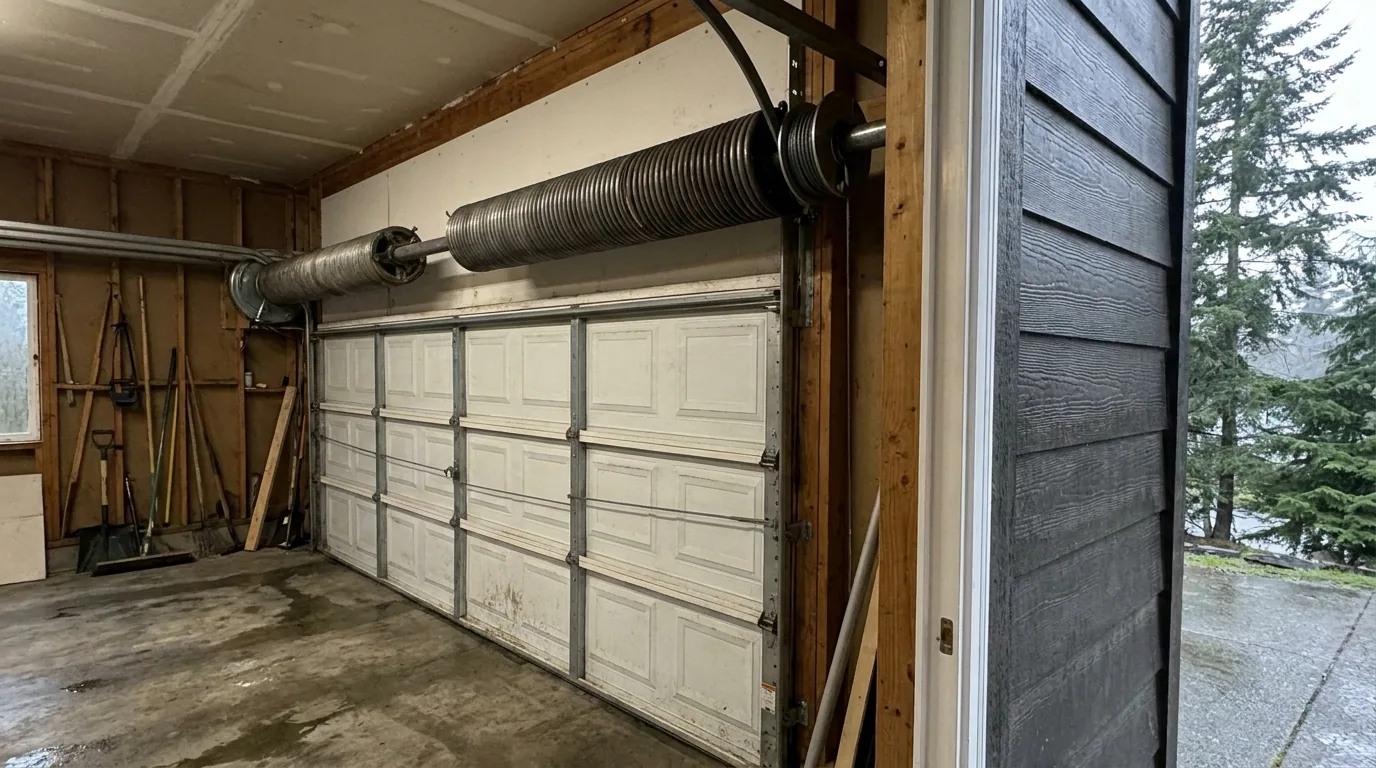
Replacing an opener involves the drive train, the rail, the header bracket, and the door's spring system, all of which carry stored force or overhead weight. Do not attempt to remove or adjust the opener, the springs, or the cables yourself, and do not reach into the rail or trolley to investigate a noise. If the door feels heavier than usual, sits crooked, shows a gap along the top, or makes a new noise at the start of a cycle, have the door and opener checked before anything is changed. A technician can inspect the springs and cables and trace a noise to its actual source.
F1 Garage Door Service and Repair LLC works on openers and doors across Seattle, including Hillman City, Columbia City, Rainier Valley, Mount Baker, Beacon Hill, West Seattle, Ballard, and Burien. You can reach the office at (206) 647-7202 or info@f1garagedoors.com. Hours are Monday through Saturday, 7:00 AM to 8:00 PM, with emergency dispatch available around the clock.